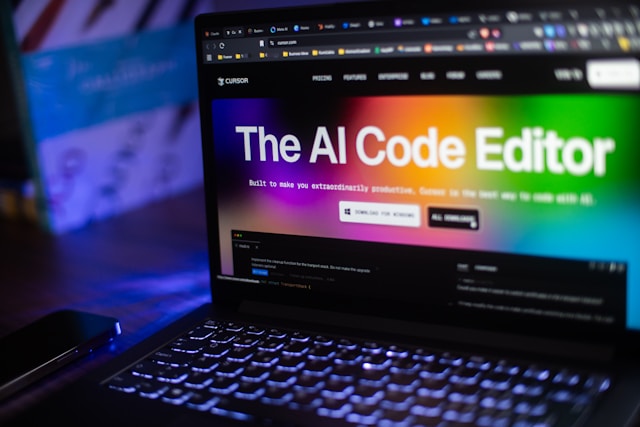
Startups burn through 60% of their runway before shipping a single feature. Enterprises pour millions into maintenance for code that should have been retired years ago. The bottleneck was never talent shortage — it was how we organise work.
Agentic coding changes the equation.
The Problem: Traditional Development Is Too Slow and Too Expensive
Software teams have spent decades optimising processes that were fundamentally constrained by human bandwidth. Code reviews happen when reviewers are free. Testing runs when someone remembers to trigger the pipeline. Refactoring gets postponed until technical debt becomes a crisis.
For startups, this means missed market windows and drained bank accounts. For enterprises, it means maintaining legacy monoliths that eat budgets but resist modernisation. The Software Development Life Cycle (SDLC) was designed around human limitations — not software quality or business outcomes.
The core argument: Agentic coding replaces those limitations with AI-driven execution, human oversight, and context-aware automation. The result is faster delivery, lower costs, and software that maintains itself.
How Agentic Coding Works
Agentic coding deploys AI agents as active participants in the development process — not as autocomplete tools, but as autonomous collaborators. These agents handle prototyping, refactoring, testing, and integration while humans focus on architecture, requirements, and review.
| Aspect | Traditional Development | Agentic Coding |
|---|---|---|
| Team Size | Large teams required | Lean teams augmented by AI |
| Development Speed | Slower due to manual processes | Faster due to AI orchestration |
| Cost Efficiency | Higher costs due to manpower | Lower costs through AI efficiency |
The agents operate through protocols like the Model Context Protocol (MCP), which gives them access to relevant context — your codebase, your documentation, your infrastructure — so they generate code that actually fits your systems, not generic snippets.
AI Orchestration: The Engine Behind the Speed
Speed in agentic coding does not come from writing code faster. It comes from eliminating waiting time.
AI orchestration dynamically assigns tasks based on real-time capacity and priority. While one agent writes a new API endpoint, another reviews the pull request, a third updates the documentation, and a fourth runs integration tests. No one waits for a stand-up meeting to unblock work.
Context engineering ensures these agents understand why code exists, not just what it does. When an agent refactors a payment module, it knows which compliance rules apply, which downstream services depend on it, and which test cases must pass. This contextual awareness prevents the brittle, surface-level changes that plague traditional automated refactoring tools.
Expert Perspective: “Agentic coding is not a technological upgrade — it is a necessary evolution. By combining AI orchestration with context engineering, companies navigate competitive pressure more effectively, delivering superior products faster and at reduced cost.”
Integrating with Legacy Systems Without the Trauma
The biggest objection to new development paradigms is always integration. Enterprises cannot afford to rewrite their core systems. Startups cannot afford to build around legacy constraints.
Agentic coding addresses this directly. AI agents analyse existing systems and generate interface layers, adapters, and gradual migration paths. Instead of a risky big-bang rewrite, you get incremental modernisation — one service at a time, one API at a time, with agents handling the repetitive translation work between old and new.
Context engineering tailors these integrations to your specific stack. An agent working with a Laravel monolith generates different adapters than one working with a microservices architecture. The solution is custom-fit, not cookie-cutter.
Success Story: From Bottleneck to Breakthrough
A mid-sized Australian startup faced mounting development costs and product delays that threatened their Series B timeline. After adopting agentic coding:
- Development time dropped 40% — agents handled boilerplate, testing, and documentation in parallel with human feature work.
- Costs fell 30% — a smaller team could deliver more output without burning out.
- New products launched on schedule — for the first time in 18 months, roadmaps became realistic commitments rather than wishful thinking.
Self-Healing Code: Quality Assurance That Never Sleeps
Traditional QA is reactive: find bugs, file tickets, fix in the next sprint. Agentic coding makes it proactive.
Self-healing loops continuously monitor code in production and staging. When an anomaly appears — a failed assertion, a performance regression, a security scan hit — agents diagnose the root cause, propose a fix, and in many cases, deploy the patch automatically. Humans review the change after the fact, not before.
This shifts quality assurance from a gate at the end of the pipeline to a continuous background process. Software stays robust because it adapts to new threats and edge cases without waiting for a human to notice them.
Governance, Compliance, and Keeping Humans in Control
Autonomy does not mean absence of oversight. Agentic coding requires explicit governance frameworks to ensure AI-generated code meets regulatory standards — SOC 2, HIPAA, GDPR, or whatever applies to your industry.
The solution is policy-as-code: automated rules embedded directly into agent workflows. Before an agent deploys anything, it checks against predefined compliance criteria. Before it accesses sensitive data, it verifies encryption requirements. These are not manual checklists — they are enforced automatically at every step.
A Human-in-the-Loop (HITL) framework ensures final accountability rests with people, not algorithms. Humans approve architectural decisions, review security-sensitive changes, and intervene when agents encounter scenarios outside their training. This preserves ethical boundaries while still capturing the speed benefits of automation.
The Financial Reality: Lower Total Cost of Ownership
The business case for agentic coding is straightforward when you look at total cost of ownership (TCO) over a three-year horizon.
| Cost Aspect | Traditional Development | Agentic Coding |
|---|---|---|
| Labour Costs | High due to large team sizes | Low due to AI assistance |
| Project Timelines | Longer due to manual methods | Shorter thanks to AI efficiency |
| Maintenance | High due to manual interventions | Low with self-healing AI systems |
Savings compound. Faster delivery means earlier revenue. Lower maintenance means fewer emergency patches and less technical debt. Smaller teams mean less overhead and faster decision-making.
For startups, this is the difference between reaching product-market fit before funding runs out and shutting down. For enterprises, it is the difference between maintaining relevance and being outpaced by competitors who adopted agentic workflows two years earlier.
What This Means for Your Organisation
Agentic coding is not a productivity hack. It is a structural shift in how software gets built.
The companies that adopt it now will establish engineering velocity as a genuine competitive advantage. Those that wait will spend the next five years catching up — if they survive that long.
Start small. Pick one internal tool or non-critical service. Introduce an AI agent into the workflow, establish your governance rules, and measure the results. Iterate from there.
The tools exist. The protocols are mature. The only remaining question is whether your team will lead the transition or react to it.
Sources & Further Reading
- Agentic AI Development for Enterprise
- Agentic Software Development Decoded
- Agentic AI Coding: What Still Remains Expensive Amid a …
Tags: #AI #AgenticCoding #SoftwareDevelopment #Enterprise #Startups #SDLC #Automation #DevOps